
NATO and the Indo-Pacific: A Bridge Too Far?
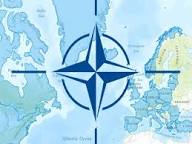
There was a moment, not long ago, when the idea of NATO extending its strategic gaze into the Indo-Pacific seemed not merely plausible but perhaps inevitable. Japan's proposal to open a NATO liaison office in Tokyo — floated seriously in 2023 — crystallised a broader conversation about whether the Atlantic Alliance could reinvent itself as the institutional anchor of a wider democratic security architecture, one that would bridge the Euro-Atlantic and Indo-Pacific theatres into a coherent whole. That moment has passed. The confluence of Donald Trump's return to the White House, America's drift toward economic nationalism, and the logic of European strategic self-preservation has effectively buried the trans-Atlantic–Indo-Pacific convergence project, perhaps for the remainder of this decade.
When the Idea Had Legs
The intellectual case for NATO-Indo-Pacific convergence was never frivolous. China's military modernisation, its assertiveness in the South China Sea, and its deepening partnership with Russia created an obvious rationale for coordination between the Alliance and its Indo-Pacific partners — Japan, South Korea, Australia, and New Zealand, the so-called IP4. The war in Ukraine accelerated this logic by demonstrating, viscerally, that security challenges in Europe and Asia were no longer separable. North Korean ammunition flowing to Russian forces, Chinese dual-use technology sustaining Moscow's war economy, and Iranian drones over Ukrainian cities made the point more eloquently than any think-tank paper.
NATO's Madrid Summit in 2022 formally acknowledged China as a systemic challenge. Subsequent summits saw the IP4 participate as observers, and Japan's proposal for a Tokyo liaison office was the most concrete institutional expression of this convergence impulse. For a brief window, it appeared that the Alliance was genuinely prepared to extend its institutional reach.
Trump and the Transactional Deconstruction of NATO
That window has closed, and the primary reason is Donald Trump. His return to power has not merely disrupted NATO's finances — it has corroded the ideological foundation on which any expansion of Alliance ambition would need to rest. Trump's approach to NATO is unambiguously transactional: American commitment is explicitly conditional on European defence spending, framed not as a shared investment in collective security but as a protection fee. The demand for member states to meet and exceed the two percent GDP spending threshold — with Trump at various points floating figures as high as five percent — has consumed Alliance bandwidth entirely.
The effect on any Indo-Pacific projection has been doubly disabling. First, European members are now focused almost exclusively on the question of self-sufficiency — how to sustain continental deterrence without reliable American backstopping. The war in Ukraine has not ended, the Russian threat has not receded, and European capitals from Warsaw to Paris are absorbed in the urgent business of rebuilding defence industries, expanding force structures, and constructing whatever autonomous security architecture might survive American disengagement. In this environment, extending NATO's strategic remit to the Pacific is a luxury that simply cannot be afforded.
Second, Trump's broader economic posture — the tariffs, the transactional bilateralism, the withdrawal from multilateral frameworks — has created a recessionary undertow that diminishes the resources available for any grand strategic initiative. An alliance whose largest member is simultaneously weaponising economic relations with allies and adversaries alike is not an alliance in a position to project collective power into a distant theatre.
China's Veto and India's Distance
Even setting aside the American variable, the NATO-Indo-Pacific convergence project faces structural obstacles that were always underappreciated in the enthusiasm of the 2022–2023 moment. China has been explicit and consistent: any formal institutionalisation of NATO's presence in the Indo-Pacific will be treated as a hostile act warranting a military response. Beijing's reaction to the Tokyo liaison office proposal — delivered with unusual directness — was instrumental in France's decision to block the initiative within Alliance councils. The Chinese calculus has not changed. If anything, with Taiwan Strait tensions elevated and the PLA's force modernisation accelerating, Beijing's sensitivity to perceived encirclement has intensified.
For India, the question was always more fundamental. New Delhi has never shown appetite for formal alignment with NATO, and the current environment only reinforces its instinct for distance. India's strategic culture is allergic to entangling alliances, its non-alignment tradition — however updated and rebranded — remains a live political force, and its relationship with Russia, however complicated by Ukraine, precludes the kind of full-spectrum Western alignment that NATO membership or partnership would imply. More practically, India understands that associating itself with any NATO Indo-Pacific formulation would hand China a ready-made pretext for further militarisation of the Himalayan frontier and the Indian Ocean approaches.
A Structural Retreat
What remains of the NATO–Indo-Pacific idea is largely rhetorical. The language of shared values and systemic challenge will persist in communiqués. The IP4 will continue to attend Alliance summits. But the institutional ambition — the liaison office, the formal frameworks, the idea of a genuinely trans-hemispheric security architecture — has retreated before the combined weight of American transactionalism, European preoccupation, Chinese deterrence, and Indian caution.
The bridge between the Atlantic and the Indo-Pacific was never fully built. It is now unlikely to be.