
The Case for India to Lead a Global South Information Security Network
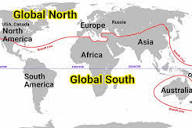
As India assumes the BRICS chairship for the fourth time and convenes the bloc's national security advisers in New Delhi, the moment invites a larger ambition. The grouping's security conversation has migrated decisively from borders and hardware to code, data and critical infrastructure. The recent demonstration that access to frontier technology can be revoked overnight by a single capital has sharpened a question the Global South can no longer defer: who secures the digital commons on which its development now rests? The answer, increasingly, must be the Global South itself — and India is uniquely placed to convene it.
The need is concrete. Artificial intelligence now automates reconnaissance, phishing and the discovery of vulnerabilities at scale; the supply chains for chips, software and cloud services run through a handful of foreign chokepoints; and disinformation aimed at domestic stability respects no border. No single emerging economy can defend against this alone. Yet the institutional scaffolding already exists in embryo. BRICS runs a working group on ICT security, and a proposal for a BRICS cybersecurity alliance is now on the table; the Shanghai Cooperation Organisation, treaty-based and equipped with its Regional Anti-Terrorist Structure, has long pursued an information security agenda. What is missing is connective tissue — and a convenor trusted across divides to weave it.
India is that convenor. It is the only major power seated at every relevant table: the Quad and its Western cyber dialogues on one side, BRICS and the SCO on the other. It speaks both idioms fluently — the Western, multistakeholder vocabulary of "cybersecurity" and the state-centric, sovereignty-first language of "international information security" favoured in Moscow and Beijing. As a democracy that is neither Russia nor China, India can lend such a network the legitimacy that a purely Sino-Russian construct would lack, ensuring it secures infrastructure without curdling into an instrument for policing content. Its credentials are tangible: a Tier-1 ranking on the ITU's Global Cybersecurity Index, a mature CERT ecosystem, and a digital public infrastructure stack already exported across the Global South.
The scope should be deliberately practical rather than grandiose. A Global South information security network anchored in BRICS and the SCO could begin with CERT-to-CERT threat-intelligence sharing and a common early-warning mechanism for cross-border incidents. It could extend to coordinated security of ICT supply chains — pooling scrutiny of the hardware, software and AI components on which members jointly depend — and to shared norms for protecting critical infrastructure and the integrity of data flows. Capacity-building is the multiplier: joint training programmes, exercises modelled on existing SCO drills, and academic exchange to close the skills gap that smaller members cannot bridge alone. Over time, common technical standards and a coordinated voice in the UN's processes on responsible state behaviour in cyberspace would convert a defensive arrangement into an agenda-setting one.
The obstacles are real and worth naming. An enlarged BRICS contains rival data-governance philosophies; the SCO seats India alongside both China and Pakistan; and regime types diverge sharply. These frictions are precisely why Indian leadership matters. Left to its loudest members, such a network risks hardening into a bloc for information control rather than information security. India's task is to hold it to the narrower, defensible mandate — securing systems and citizens — while resisting the slide towards censorship that authoritarian partners may prefer.
The strategic logic is the one exposed by every recent technology shock: dependence is a mortgage on sovereignty, and solidarity is the hedge. By converting its position athwart East and West into genuine convening power, India can offer the Global South something neither Washington nor Beijing will — a security architecture its members actually own.