
Trump In Beijing: The Price Of The Peace Pivot
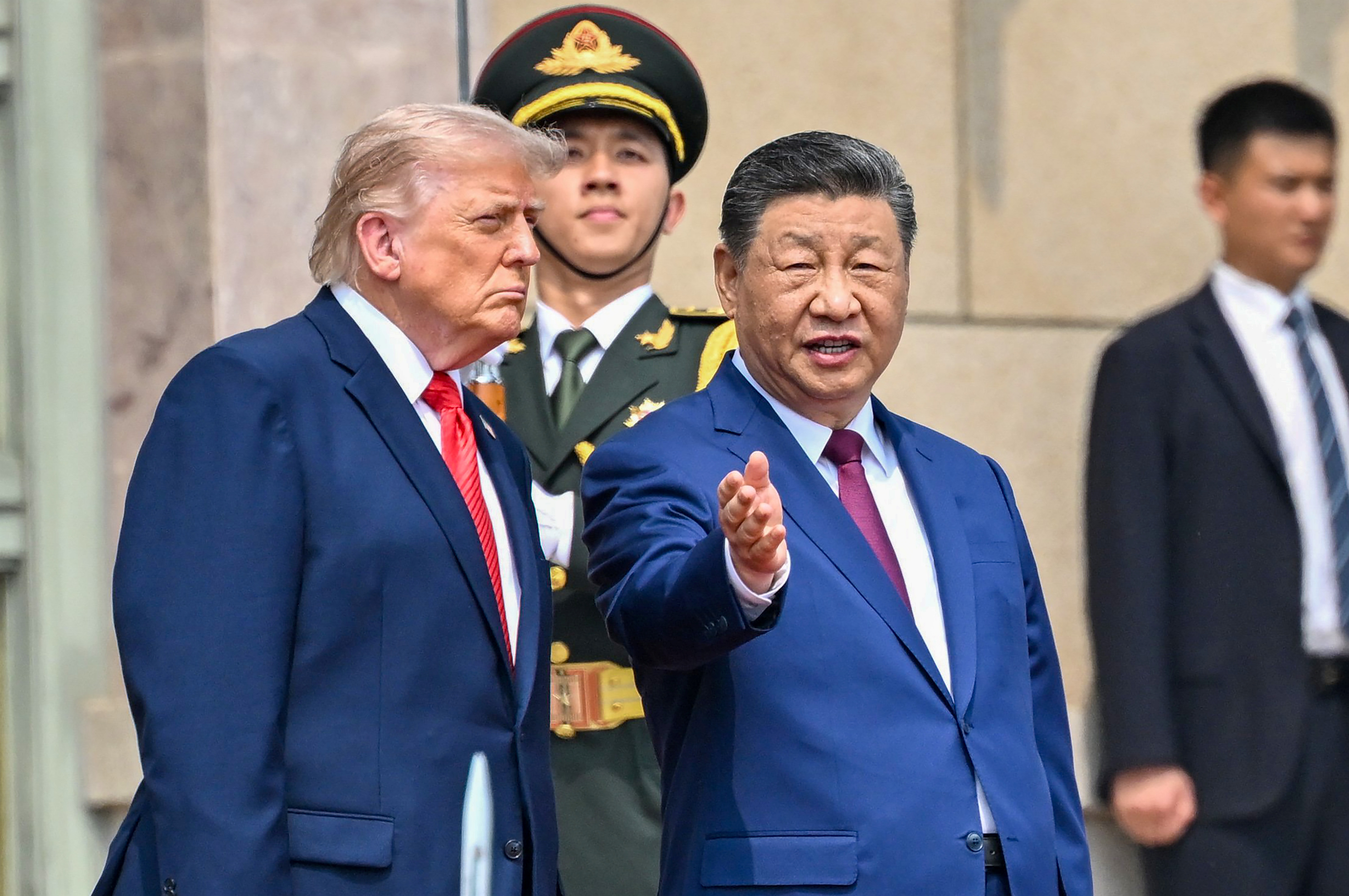
The two-day meeting between Donald Trump and Xi Jinping in China is consequential in many respects. First, it transcends the expectation that Donald Trump was caught in the quagmire of the escalating and unending Iran war; regardless, the fact that he is going ahead to meet Xi Jinping is telling of his deep concern about domestic inflation and the stability of the American economy.
Amidst a rising expenditure due to the war, which in turn has forced him to slip on his domestic promises, Trump's approval ratings have drastically fallen, and this could be one of the other reasons behind Donald Trump’s willingness to engage Xi Jinping. Trump is travelling to China with a high-powered business delegation, the first US president to visit China in nine years, in an effort to reach a grand economic bargain with China.
The key ingredients of the deal include addressing the trade deficit with China, a falling trade value as US-China trade has shrunk by 30 per cent, semiconductor and key technology exports, and other issues in areas such as energy and agriculture. In the US, manufacturers, especially in sectors such as steel, automobiles, and some technologies, remain circumspect of a grand bargain between the US and China that would allow China to invest in the United States.
The key issues from the US side going into these talks are likely to centre on trade rebalancing, the reduction of the bilateral deficit, technology transfer restrictions, and, perhaps most pressingly, the role China plays in sustaining Iran's war economy. These three threads, if pulled together coherently, could either yield an opportunity for the rest of the world.
One of the most remarkable theories floating around to justify the US-China meeting is the prospect of a grand bargain between the world's two leading powers. The theory may sound compelling, but on closer inspection, it carries little credibility, given that Trump's steps in both Venezuela and now in Iran have significantly hit China's economy and forced Beijing to diversify its own oil supplies.
The fact that the United States Treasury sanctioned several Chinese companies in the lead-up to the meeting between the two leaders also suggests that Trump predictably wants to enter the talks from a position of strength. China's support to Iran during the past months, since the war in Iran broke out, has been deeply scrutinised by the United States, and the Trump administration is acutely aware of Chinese intentions.
Washington has already targeted China for playing a role in the Iran war, sanctioning individuals and Chinese companies in both China and Hong Kong that helped Iranians gain access to supplies and war equipment. In particular, the State Department has accused Meentropy Technology (Hangzhou) Co. Ltd, The Earth Eye, and Chang Guang Satellite Technology Co. Ltd. of providing satellite imagery that enabled Iran's military strikes against US forces in the Middle East.
While Trump has calculatedly fluctuated between calling Xi a friend and a competitor, Xi has remained steady in avoiding any cushioned expectations from the meeting. The fact that the ceasefire has held despite a limited exchange of fire between Iran and the US, and Israel's continued hostilities in Lebanon, depicts a compelling need for a cessation of hostilities on all sides.
Trump and Iran both want a way out of this war without losing face, even as Trump confronts midterm elections, rising prices at home, and increasing dissensions within the MAGA base against the war. In Iran, the precedence of civilisational hubris over economic interest has prevented Tehran from coming to the table. The leverage that Iran has found in blocking the Strait of Hormuz has perhaps even proven surprising to Tehran itself.
Amidst these complications, Trump finds China as the biggest economic and geopolitical actor with which, if a deal is reached, could, in one fell swoop, ease global tensions. It could convince Iran to find an off-ramp, which is expected to be a Trumpian point of discussion with Xi. China could also agree to buy more from America — again, a key Trump desire — and could stop supplying support to Iran in equipment and intelligence.
It is a different matter that China is expected to do none of these things, but it nonetheless possesses the capability. With Putin, for the first time since the start of the war with Ukraine, having declared during his Victory Day parade that the conflict with Ukraine may be nearing its end, and with Iran considering a proposal for short-term peace, there may be a chance at global peace like never before.
f the world's greatest economies and powers decide to lean into that imperative, the odds of Iran coming to an agreement may be greater than at any previous moment. The Trump administration brings a completely different approach to diplomacy - one that is largely economic in the case of its relationship with China. In his visit to China, the fanfare around his earlier proposal of a G2 with Beijing seems largely punctured; what remains is an economic optimism punctuated by the unpredictability of Washington's ongoing hostilities with Iran.