
Originally Published by the Indian Express
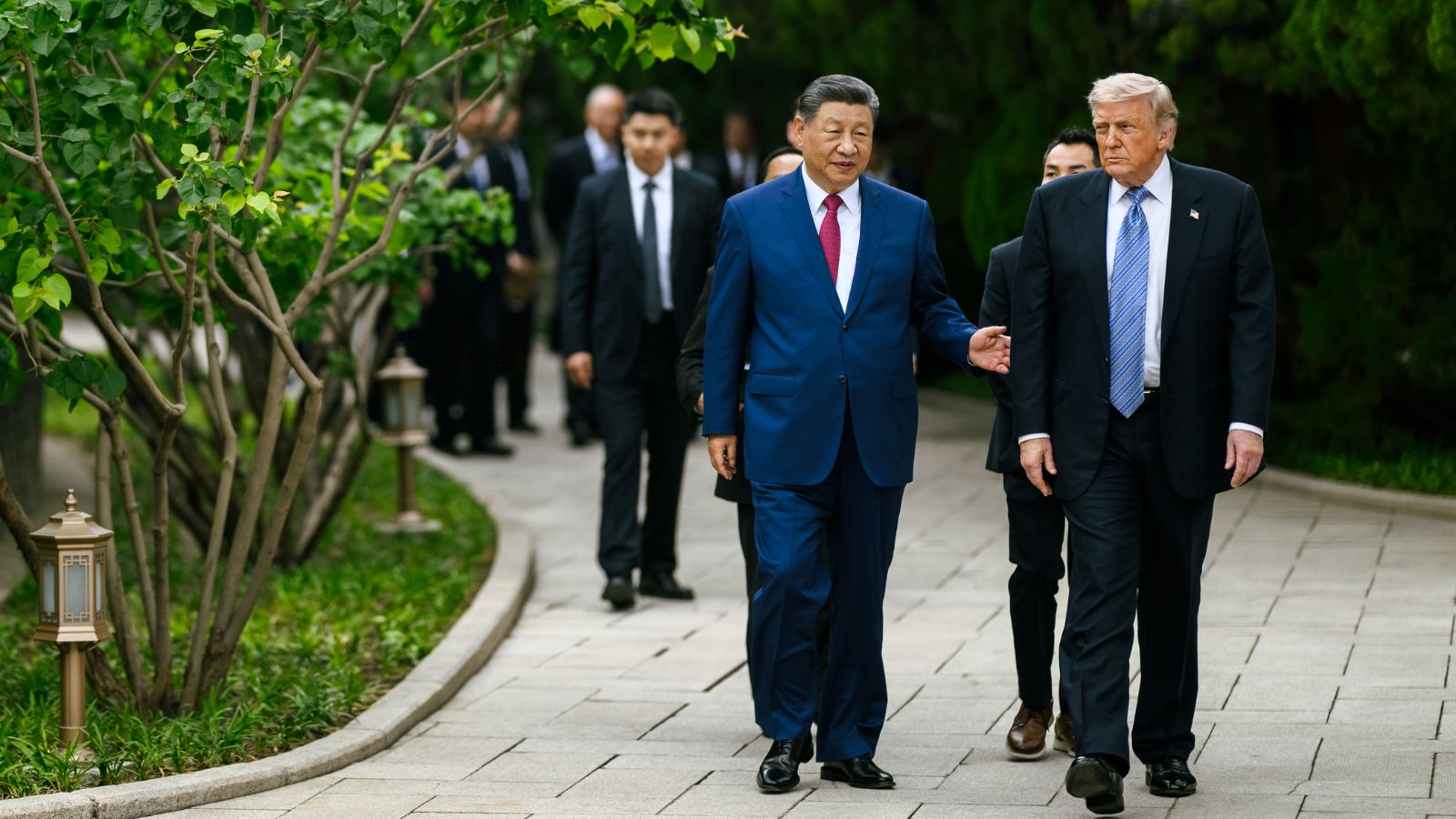
The drumbeat around Trump’s visit to China seems louder than the deliverables it packed seem worthy for. But perhaps that was the intention. The lag in US presidential visit – 9 years – and the power packed business delegation that accompanied the president definitely seemed worthy of the hype but close watchers of US-China relations cautioned that any expectation of a breakthrough headway in the bilateral relations between the two largest economies and military powers of the world cannot but tempered by the structural realities of the day. Yet, Trump brought a fresh approach to the table through a calibrated leaning on China that would provide economic openings for the US government and companies.
Trump’s high-level delegation visit to China did not resolve any of the long-standing issues for obvious reasons. Some theorists would argue that the both US and China may have structurally reached a plateau for a positive review of the relationship, while the competitive framework of the bilateral relationship remains highly dynamic. In other words, neither China nor the US should expect a ceding of the ground to the other’s advantage in an effort to make nice and the friction in areas technology, export controls, rare earths, regional balancing, issues of sovereignty. Yet, Trump appeared leaning excessively on Xi Jinping during the visit and China seemed to enunciate its red lines much more clearly. The standout issue was Taiwan where China seemed to draw the equation of intervention and conflict quite clearly and portrayed the issue as the defining feature of stability in US-China relations. In the absence of Trump’s unpredictability, the lack of a commensurate response from the US on China’s advantageous rhetoric appears to be a quid pro quo for an economic modus vivendi with China.
Trump is hemmed in by domestic and external economic constraints like never in the past. In starting the war with Iran, where a conclusive end to the war seems perilously elusive, many reckon Trump is hoisted by his own petard. In Iran, Trump faces difficult choices between saving a face and allowing Iran to emerge stronger in polemic. Adding salt to the injury are the latest report that despite the US-Israel joint military campaigns, Iran retains operational access to 30 of its 33 missile sites along the Strait of Hormuz making any free movement of ships through the Strait virtually impossible. Moreover, the Iranian Foreign Minister Abbas Aragchi during the BRICS foreign ministers’ meeting reiterated an unyielding position under threats. The subsequent energy and supply chains blockade has left the world, particularly the Global South reeling. India itself has announced an advisory to ration energy usage at home. Domestically, both inflation and energy prices have left little ground for Trump’s political maneuverability as he heads to the midterms in November this year. While we wait for additional details on elaborate the outcomes of the visit if any, China’s decision to buy Boeing planes appear as the only perceptible win for Trump. Trump has claimed that Beijing is onboard the idea of an open Strait of Hormuz. What that translates in action from China remains to be seen, especially in the light of a long-standing relationship with Tehran and the visit of Iranian Foreign Minister to China just ahead of Trump’s visit. What can be reasonably expected from China on Iran is its ability to convince Tehran of keeping the Strait of Hormuz open, especially given its own stakes with China importing at least 12 percent of its crude from Iran.
Although Trump seemed to walk away ‘impressed’ from the bilateral meeting, the US-China relationship could go two ways from here. Trump’s apparent headways with China could remain a trip with more pomp and show than deliverables, given how bought Trump is to the ideas of excessively drawn conclusions. Or, this could be the beginning of the US acceptance of the inevitability of China’s military, technological and economic ascendance requiring a modified mechanism to co-exist with China. It is rare for the Chinese leader to outline achievements with the US before they actually materialize. Therefore, Beijing’s declaration that “a series of new common understandings” has been reached between China and the US ignites inquisitiveness. Any accommodation of China by the US, economic, military or political will spell order-defining changes for US Asia-Pacific allies, Taiwan and indeed the Indo-Pacific region. Regardless, Trump’s visit to China will definitely be looked at in history as a moment of subtle turn in US-China relations, with the Chinese leader asserting a stoicly strong position.